“Hidden water leaks can start quietly, but they may cause serious damage if left unnoticed. Unexplained water bills, damp spots, musty odors, unusual sounds, and changes in water pressure can all be important warning signs. Early detection can help protect your property, prevent costly repairs, and give you peace of mind.”
Key Takeaways
- Hidden water leaks can cause serious damage before they become visible.
- Rising water bills, damp spots, musty odors, and unusual sounds can signal a leak.
- Changes in water pressure or unexplained wet areas should not be ignored.
- Simple checks, such as a water meter test, can help identify possible leaks early.
- Professional leak detection can locate hidden leaks with greater accuracy and less disruption.
- Early detection can prevent costly repairs, reduce water waste, and protect your property.
Hidden water leaks can cause serious damage long before they become visible. A small leak behind a wall, beneath a floor, or inside a plumbing line may continue unnoticed for weeks or even months. By the time the signs become obvious, the damage may already include weakened materials, mold growth, damaged flooring, or unexpectedly high water bills.
Learning how to recognize the early warning signs can help homeowners respond before a minor plumbing problem becomes an expensive repair. From unusual sounds and damp spots to changes in water pressure and unexplained moisture, your home can provide several clues when something is wrong. Knowing what to look for is the first step toward protecting your property, your comfort, and your budget.
Why Hidden Water Leaks Can Be Difficult to Notice
A visible leak is usually easy to identify. Water dripping from a faucet, pipe, or fixture immediately tells you that something needs attention. Hidden leaks are different because the source may be located behind a wall, beneath a concrete slab, underground, or inside a ceiling.
Water can also travel away from the original leak before appearing on a visible surface. This means a damp patch on a ceiling may not be directly below the damaged pipe. Because of this, simply looking for where water appears may not reveal where the problem actually begins. The longer a hidden leak continues, the greater the potential for damage. Moisture can affect drywall, wood, insulation, flooring, and other building materials. Early water leak detection can help identify the source before the problem spreads.
1. An Unexpected Increase in Your Water Bill
One of the easiest warning signs to overlook is a sudden increase in water usage. If your household habits have stayed the same but your water bill has increased noticeably, there may be water escaping somewhere in your plumbing system. A hidden leak can waste water continuously, even when nobody is actively using a faucet, shower, toilet, or appliance.
Compare recent bills with previous months to identify unusual changes. Seasonal differences can affect water consumption, but a persistent increase without an obvious explanation deserves attention. A higher bill does not automatically confirm a leak, but it is an important reason to investigate further.
2. Damp Spots or Water Stains
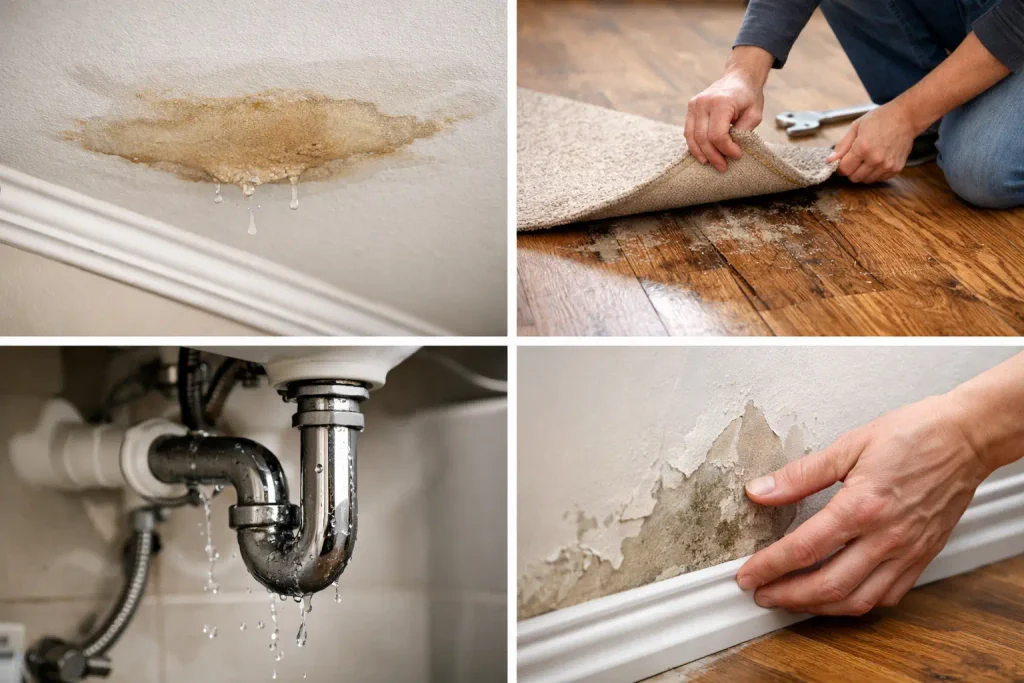
Water stains on ceilings, walls, and floors can be strong indicators of a hidden plumbing problem. Look for yellow, brown, or darker patches that appear to grow over time. Bubbling paint, peeling wallpaper, swollen drywall, or damaged flooring can also suggest that moisture is accumulating behind or beneath the surface. Do not assume the visible stain is the exact location of the leak. Water can travel through building materials before reaching a point where it becomes noticeable. If you repeatedly notice moisture in the same area, professional hidden water leak detection may be necessary to locate the actual source.
3. Musty Smells and Persistent Moisture
Your sense of smell can sometimes identify a plumbing problem before your eyes can. A persistent musty or damp odor may indicate that moisture is collecting somewhere that does not receive enough airflow. This can happen behind walls, underneath flooring, around cabinets, or in other enclosed spaces.
Moist environments can also encourage mold and mildew growth. If a musty smell continues even after cleaning the area, there may be an underlying moisture source that needs to be investigated. Ignoring persistent odors can allow a small problem to continue unnoticed.
4. Unexplained Sounds of Running Water
Have you ever heard water running when every faucet is turned off? A faint hissing, dripping, or rushing sound may indicate that water is moving through a damaged or leaking pipe. The sound may be particularly noticeable at night when the house is quiet.
Start by making sure all faucets, appliances, toilets, and other water sources are completely off. If you still hear water moving, check the water meter to see whether it continues to register usage. Unusual plumbing sounds should not automatically cause alarm, but they can be a valuable clue when combined with other warning signs.
5. Changes in Water Pressure
A sudden or unexplained drop in water pressure can sometimes point to a problem within the plumbing system. If water pressure has noticeably changed throughout the property, there may be an issue with a supply line, valve, or another part of the system. A localized pressure change may also help indicate that the problem is closer to a particular fixture.
However, water pressure can change for several reasons, so it should not be treated as proof of a leak on its own. When reduced pressure appears alongside other symptoms, it may be worth arranging a professional plumbing inspection.
6. Warm or Damp Areas on the Floor
Unexpected temperature changes can provide another clue. If one section of flooring feels unusually warm compared with surrounding areas, it could indicate a leak involving a hot-water pipe beneath the floor. Damp or unusually soft flooring may also suggest that moisture has accumulated underneath the surface.
This is particularly important when the affected area is near plumbing fixtures or when there is no obvious explanation for the moisture. Leaks beneath concrete foundations can be especially difficult to locate because the plumbing is not directly visible. In these situations, specialized slab leak detection methods may help identify the problem without unnecessary damage to the surrounding area.
7. Mold or Mildew Appearing Without an Obvious Cause
Mold and mildew need moisture to grow. If these problems repeatedly appear in an area that should normally remain dry, there may be a hidden source of moisture nearby. This could be caused by condensation, poor ventilation, or a plumbing leak.
Pay close attention to recurring mold around walls, cabinets, ceilings, flooring, and plumbing fixtures. Cleaning the visible growth may improve the appearance temporarily, but the underlying moisture source still needs to be addressed. Finding and stopping the source is an important part of effective moisture detection.
8. Wet or Unusually Green Areas Outdoors
Not every hidden leak occurs inside the building. Underground plumbing and irrigation lines can leak beneath lawns, gardens, driveways, and other outdoor areas. Because the water disappears into the ground, these leaks may continue for a long time without creating an obvious puddle.
Watch for unusually green grass, constantly damp soil, muddy patches, or areas that remain wet when the rest of the yard is dry. A sudden change in landscaping near the water supply line can be an important clue. Professional underground water leak detection can help determine whether the moisture is connected to a buried pipe.
9. Cracks, Warping, or Damage to Building Materials
Persistent moisture can gradually affect the materials around your home. Wood may swell or warp. Flooring may buckle. Paint can blister or peel. Drywall may soften or develop visible discoloration. In more serious cases, prolonged moisture can contribute to structural deterioration.
These signs should not automatically be blamed on a plumbing leak because building materials can be affected by many conditions. However, unexplained damage combined with other moisture indicators deserves further investigation. Finding the problem early can reduce the amount of material that needs to be repaired or replaced.
10. Your Water Meter Shows Usage When Everything Is Off
A water meter can provide a simple way to check for possible leaks. First, make sure every faucet and water-using appliance is turned off. Avoid flushing toilets during the test. Check the meter and record the reading. Wait for a period of time, then check it again.
If the meter continues moving despite no intentional water use, there may be a leak somewhere in the system. This basic water meter leak test cannot tell you exactly where the leak is located, but it can help confirm that further investigation may be necessary.
How Professionals Detect Hidden Water Leaks
Finding a hidden leak is not always as simple as following visible moisture. Professional leak detection services can use specialized methods to identify the source while minimizing unnecessary disruption. Acoustic equipment can detect the sound of water escaping from pressurized pipes. Thermal imaging may identify temperature differences associated with hot or cold water behind walls and floors. In some situations, tracer gas can help locate difficult leaks in pipes beneath surfaces.
Camera inspections can also be useful when investigating certain plumbing and sewer problems. The appropriate method depends on the type of plumbing system, suspected leak, and location. The goal is not simply to find where water is visible. It is to determine where the leak actually begins.
Simple Leak Checks You Can Perform at Home
You do not need specialized equipment to perform a few basic checks. Start by inspecting visible plumbing beneath sinks, around toilets, near water heaters, behind appliances, and around other fixtures. Look for dampness, corrosion, stains, or unusual odors.
You can also perform a toilet dye test by adding a few drops of food coloring to the toilet tank. Wait without flushing and check whether the color appears in the bowl. If it does, the toilet may be allowing water to escape through the flapper or another component. Checking your water meter when the property is not using water can also provide useful information. These checks can help identify warning signs, but they cannot replace professional diagnosis when a hidden leak is suspected.
When Should You Call a Professional?
Some plumbing problems can be monitored with basic checks, but certain warning signs should be taken seriously.
Consider professional help when you notice:
- A continuously rising water bill
- Water stains that keep returning
- Persistent musty odors
- Unexplained damp areas
- Sounds of running water when fixtures are off
- Sudden changes in water pressure
- Repeated mold or mildew growth
- Wet areas around the foundation
- Possible leaks beneath floors or slabs
- A water meter that continues moving when no water is being used
Acting early can help prevent a small leak from becoming a much larger problem.
Why Early Detection Matters
A hidden leak rarely improves on its own. Every day that water continues escaping is another day when moisture can affect surrounding materials. What begins as a small plumbing issue can eventually lead to damaged walls, flooring problems, mold growth, wasted water, and more complicated repairs.
Early plumbing leak detection allows property owners to respond before the damage expands. It can also make the repair process more targeted because identifying the source helps determine what actually needs attention. Most importantly, early action provides peace of mind. Knowing that a suspected leak has been identified and addressed can protect both the property and the people who depend on it.
Final Thought
Hidden water leaks often begin quietly, but their consequences can become anything but small. A strange smell, unexplained stain, rising water bill, or unusual sound may seem insignificant at first, yet these simple clues can sometimes reveal a much bigger plumbing issue.
Paying attention to what your home is telling you can make a meaningful difference. Early detection can reduce damage, limit unnecessary repairs, conserve water, and give you greater confidence that your plumbing system is working as it should.
Frequently Asked Questions
1. What is the most common sign of a hidden water leak?
An unexplained increase in your water bill is one common warning sign. Damp spots, musty odors, unusual sounds, and changes in water pressure can also indicate a hidden leak.
2. Can a water leak exist without visible water?
Yes. Leaks can occur inside walls, beneath floors, under concrete slabs, or underground. Water may travel through materials before becoming visible.
3. How can I check for a leak using my water meter?
Turn off all faucets and water-using appliances, then check your meter. Wait for a period without using water and check it again. If the reading changes, there may be a leak.
4. Can a high water bill mean I leak?
It can. If your water usage habits have not changed but your bill suddenly increases, checking for leaks is a sensible first step.
5. Why does my house smell musty?
A persistent musty odor can be caused by trapped moisture, poor ventilation, condensation, or a hidden water leak. If the smell continues, investigate the source rather than simply masking the odor.
6. What causes warm spots on a floor?
A warm spot may sometimes indicate a leaking hot-water pipe beneath the floor. Other causes are possible, so professional evaluation may be needed to determine the source.
7. Can hidden water leaks cause mold?
Yes. Persistent moisture can create conditions that encourage mold and mildew growth. Addressing the source of the moisture is essential for preventing the problem from continuing.
8. How are hidden water leaks detected?
Depending on the situation, professionals may use water meter testing, acoustic listening equipment, thermal imaging, tracer gas, or camera inspections to locate the source.
9. Are underground water leaks difficult to find?
They can be. Underground leaks may allow water to disappear into soil without creating an obvious puddle. Unusually wet or green areas can provide useful clues.
10. When should I get professional leak detection?
Professional inspection is worth considering when you notice persistent moisture, unexplained water usage, recurring stains, unusual plumbing sounds, pressure changes, or other signs that suggest a hidden leak.